
The European Union has agreed to the most significant overhaul of its customs framework since the creation of the Customs Union in 1968, marking a decisive shift in how goods entering and leaving the EU will be controlled, taxed, and facilitated. Announced in March 2026, the reform responds to explosive growth in e‑commerce volumes, increasing regulatory complexity at the border, and intensifying geopolitical risk. For freight forwarders, customs intermediaries, and global traders, the changes will be both transformative and unavoidable.
At the heart of the reform is a new three-pillar structure: the creation of an EU Customs Authority (EUCA), the launch of a centralised EU Customs Data Hub, and a redesigned trader framework anchored by a new “Trust and Check” status for highly compliant operators.

The EUCA, based in Lille, France, will introduce EU-level governance and intelligence into a system historically run almost exclusively at the national level. While customs authorities in member states retain operational control and enforcement powers, EUCA will analyse real-time data from across the Union to identify high-risk consignments, set common risk criteria, and coordinate crisis responses. This two-tier model is designed to strengthen controls without impeding legitimate trade.
Equally significant is the EU Customs Data Hub, a single digital environment that will replace today’s patchwork of national customs IT systems. Rather than submitting data separately to multiple authorities, importers and exporters will ultimately file once at EU level. While the Data Hub promises improved predictability and speed over the long term, it will require substantial systems integration and process change for traders, freight forwarders, and software providers.
For compliant businesses, the reform offers a powerful incentive through the new Trust and Check status. Building on the existing AEO regime, this category is aimed at the most transparent and trusted operators, granting significantly reduced controls, faster release of goods, and streamlined customs interactions. For logistics providers supporting high-volume shippers, this creates a clearer distinction between low-risk and high-risk supply chains.
.png?width=337&height=337&name=_Informative%20Style%20(1).png) The most disruptive elements of the reform, however, affect the e-commerce and parcel sector. The long-standing customs duty exemption for consignments under €150 will be abolished. From 1 July 2026, a fixed €3 customs duty will apply to low-value parcels entering the EU, levied per tariff category within each parcel. This interim measure will remain in force until the Data Hub is fully operational, when normal tariff rates will apply.
The most disruptive elements of the reform, however, affect the e-commerce and parcel sector. The long-standing customs duty exemption for consignments under €150 will be abolished. From 1 July 2026, a fixed €3 customs duty will apply to low-value parcels entering the EU, levied per tariff category within each parcel. This interim measure will remain in force until the Data Hub is fully operational, when normal tariff rates will apply.
Crucially, e-commerce platforms will become the importer of record, shifting legal and financial responsibility away from consumers. Platforms that systematically fail to comply will face financial penalties, and an additional EU-wide handling fee is expected to be introduced by November 2026.
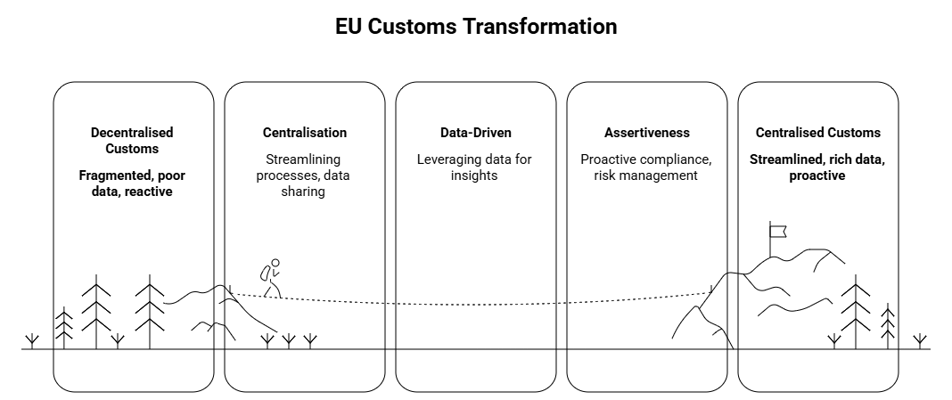
With over 4.6 billion small parcels entering the EU in 2024, 91% from China, the reform represents a structural recalibration of market access rather than a marginal compliance adjustment. For the freight industry, the message is clear: EU customs is becoming more centralised, more data-driven, and more assertive. Early preparation will be critical for those seeking to protect speed, compliance, and competitiveness in the new regime.
Rob Hardy, CEO and Founder of the EORI Group
Revolutionising customs with innovative solutions, Rob Hardy, founder of EORI (UK), is known for his exceptional business acumen and deep customs network connections. As the All Ireland Business Man of the Year Award winner, Hardy's strategic thinking and unwavering determination have propelled him to trailblazer status. With 35 years of achievements in European shipping, freight, and customs clearance, his record-breaking accomplishments include running the largest 24hr freight clearance facility in the UK.


.png)